

YLighting LED Lamp Buyers' Guide FAQs
What is an LED and how does it work?
Light emitting diode (LED) technology is based on electrifying a diode that emits a single wavelength (color) of radiation. To gain a broader spectral output, these diodes are mated with phosphor technology in the same manner as fluorescent lamps. Diodes are relatively small (about 1/3 of an inch square), so an LED bulb has many of those tiny chips clustered together to create adequate light.
LEDs are undergoing the most vigorous advancement of the electric lighting technologies. What was once used as the indicator light on your VCR has now been reborn into a nearly full spectrum source used for its red-blue-green color mixing capabilities and as a neutral source for tasks and accents.
What are the advantages of LEDs?
LEDs have several advantages over conventional incandescent lamps. For one thing, they don't have a filament that will burn out, so they last much longer. Additionally, their small plastic bulb makes them very durable. They also fit more easily into modern electronic circuits. But the main advantage is efficiency. In conventional incandescent bulbs the light-production process involves generating a lot of heat (the filament must be warmed). This is completely wasted energy, unless you're using the lamp as a heater, because a large portion of the available electricity isn't going toward producing visible light. Conversely, LEDs generate very little heat, meaning a much higher percentage of the electrical power is going directly to generating light, which cuts down on the electricity demands considerably.
What are the disadvantages of LEDs?
The higher upfront cost of LEDs relative to other traditional lamps continues to be a drawback. However, given their energy savings and long life, most people typically make back the initial cost within a couple of years. Another limitation to LEDs is that they light a small area of space relative to other lamping options. This makes them a great candidate for task lighting, but not general or ambient lighting applications.
Why do LEDs cost more than other lighting options?
LED sources are the cutting edge of technology, and, as such, they are expensive to buy. Like all things economic, prices will likely drop as volume and popularity grow.
Where should I use LEDs?
LEDs have excellent directionality, making them a great option for the following lighting applications:
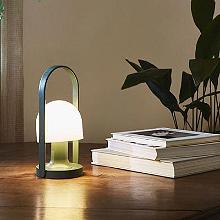
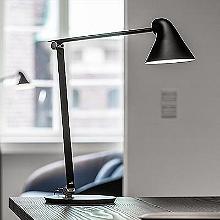
Task and reading lamps
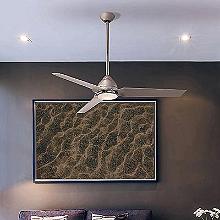
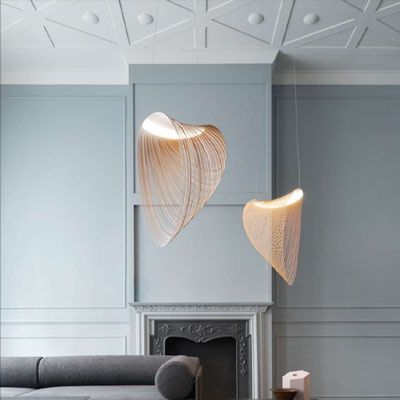
Pendants and overhead
Accent and display lighting
Cove lighting
Outdoor and landscape accent lighting
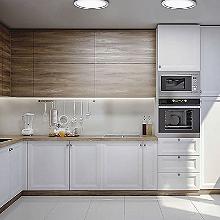
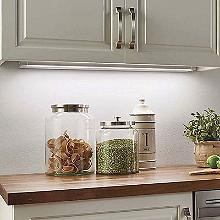
Linear strip lighting (under kitchen cabinets)
Recessed lighting/ceiling cans
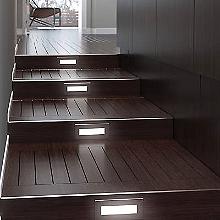
Stair and walkway lighting
Difficult to reach places (due to their long life and low maintenance)
Art lighting (unlike incandescent and fluorescents, LEDs don't produce UV radiation, making them safe for artwork.)
How long will an LED last?
A quality LED lamp can last anywhere from 75,000 to 100,000 hours. If you operate the lamp for 8 hours per day, 365 days a year, your LED lamp could last 25-34 years!
Do I have to replace individual LED diodes?
An LED does not burn out like a standard lamp, so individual diodes do not need to be replaced. Instead, the diodes gradually produce lower output levels over a very long period of time. An LED is typically considered "dead" at 70% of initial light output.
Is it true that LEDs produce a blue glow?
Historically, LEDs received a bad rap for producing a greenish to bluish color. However, the recent development of LED technology has seen high output white light growing at an exponential rate without sacrificing color rendering or efficiency.
How does the brightness of LED lighting compare to incandescent lighting?
LED light bulbs are much brighter than incandescent or halogen bulbs of the same wattage, but LEDs are not available in very high wattages. Thus, when replacing incandescent or halogen lamps with LED lamps, more LED lamps are often needed. For example, to replace one 100-watt incandescent bulb you may need two 5-watt or 6-watt LED bulbs. Although you have more bulbs you are still using 85% less electricity.
How efficient are LED bulbs compared to incandescent bulbs?
The efficacy of newer LED light bulbs is more than five times higher than comparable incandescent bulbs. In other words, LED light bulbs use only about 20% as much electricity to produce the same amount of light. However, because LED bulbs direct a larger percentage of light where it is needed, in many applications they are as much as ten times as effective as incandescent bulbs, reducing energy use by 90%.
Can LEDs replace the conventional incandescent and CFL light bulbs in my existing fixtures?
The ability to purchase an LED bulb and screw it into an existing incandescent fixture (like you can with a CFL) is known as retrofitting. Currently, retrofitting isn't widely available for LEDs. You may find an LED module that can physically fit into an existing incandescent fixture, but that fixture likely doesn't maximize the LED's efficiency. The good news is that much advancement is being made in retrofitting LEDs, and we expect to see more options available soon.
Are LED lights dimmable?
Yes, LEDs can be dimmed. But similar to fluorescent sources, the dimming is in the driver or transformer technology and must be specified as such from the manufacturer.
Do LEDs generate noise when in use?
No. Unlike some incandescent, halogen and fluorescent lamps, LEDs do not "buzz" when powered on or when dimmed.
Shop LED Lamps now.


Fluorescent and CFL Basics
Fluorescent lamps produce light when an electric arc passes between cathodes to excite mercury and other gases producing radiant energy, which is then converted to visible light by a phosphor coating.
A compact fluorescent lamp (CFL) is a type of fluorescent lamp. The screw-in CFLs can be used to replace incandescent lamps in standard lamp sockets.
Fluorescent and CFL Advantages:
Energy efficient. Fluorescents and CFLs use about 50-80% less energy than incandescent bulbs.
Long life. Fluorescents and CFLs last about 10 times longer than incandescent bulbs.
Improving color temperatures. Previously, fluorescents were known for only producing a cool white color. Today's fluorescent and CFL options can produce a warmer "yellow" color.
Versatile. CFLs can be applied nearly anywhere that incandescent lights are used.
Fluorescent and CFL Limitations:
Mercury contents. Fluorescents and CFLs contain small amounts of the toxic metal mercury. This metal may be released if the bulb is broken, or during disposal.
Sensitivity to on/off cycling. The lifetime of CFLs is reduced in applications where the light is switched on and off frequently.
Dimming limitations. Dimmable CFLs are available, but be sure to choose a CFL that states it can be used on dimmer switches. Using a regular CFL on a dimmer can reduce its lifespan.
Limited outdoor use. Fluorescents and CFLs can be used outdoors, but should be covered or shaded from the elements. Low temperatures may reduce light levels - check the package label to see if the bulb is suited for outdoor use.
Cooler color temperatures. While fluorescent technology provides lamps with warmer color temperatures, fluorescents and CFLs still don't produce light quite as warm as incandescent or halogen lamps.
Best Uses for Fluorescents and CFLs:
General lighting in high-use areas such as family and living rooms, kitchens, dining rooms and bedrooms.
Recessed lighting
Decorative lighting
Task lighting
Outdoor lighting (in areas that stay above 40° Farenheit)
Wall washing
Wall Sconces
Shop Fluorescent Lamps now.